Brahman Naman is an absolutely hilariouos teen sex comedy set in the 80’s. It’s the Indian Superbad or American Pie with major homage to John Hughes movies, too.
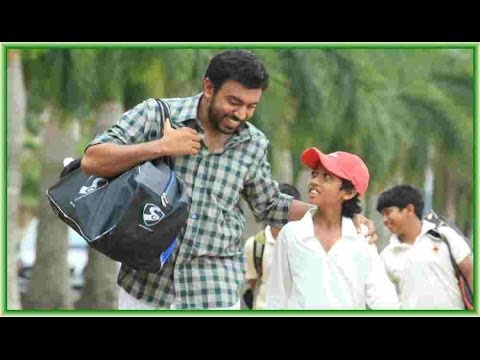
Naman is the leader of his Bangalore college quiz team, and the leader of nerds in the same way Anthony Michael Hall was the leader of his group of nerds in Sixteen Candles. They delight in throwing trivia at each other and quoting Noel Coward.
The film opens with Naman waking up in the middle of the night to masturbate in the refrigerator door, wrapping his arms around the appliance to held the door tight. Really.
The film is mostly all in English with the occasional “yaar” or other term. Naman and his friends are Brahman, and there’s a sweet scene of him doing rituals with his father. Ash, is a nerdy girl who yearns to be on the quiz team with Naman and his friends, and has a major crush on Naman that is not reciprocated. He uses every excuse in the book to avoid her, even though his friends point out that she is Brahman, too.
The boys are sex obsessed, but don’t have today’s internet porn. All they have are racy magazines and sneaking into porno movie theaters. Naman has an elaborate gadget attached to his ceiling fan for a masturbation aide, but the ultimate was his putting his erect penis into a fish tank and the ejaculation was shown in close up. (!!!) Netflix bought the movie, and I wonder if that scene will need to be edited out even for streaming.
For all their bravado, the boys run away from being set up with a prostitute for their first real experience.
My favorite part of the film, however, is when their quiz team takes a trip to Calcutta for a quiz competition. On the train they meet a female team from Chennai, and Naman falls for the leader, Naina. As his friend points out, she is Naman in female form, cutting him down to size with her wit.
I was probably the only one in the Sundance theater to recognize Biswa Kalyan Rath from the Pretentious Movie Reviews team. He’s a standup comedian in India, too, and has the small role in the movie as a guy at their college always trying to impress Naman and his pals with his sexual exploits on trains, planes, etc.
It’s an enjoyable comedy. and although my son was confused by the references to Brahmans and caste, I thought the film does a good job pointing out the issues with jokes understandable for non-Desi’s.
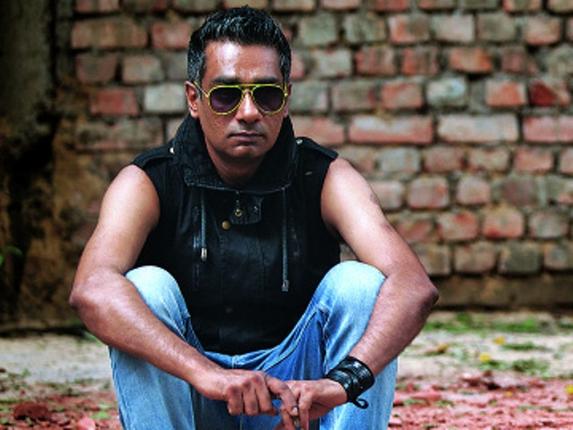
At the Sundance showing after the film, I asked the director, Q, about censorship of films in India and he went on a rant about the restrictive censor board. This is certainly not like any Indian film I’ve ever seen. Q said in a recent interview “that the film is far from misogynistic. “We’re showing the boys for who they are — sexually starved and confused. And at the same time, we give women power. What you expect is definitely not what you’ll end up with,” he promised.”
Highly recommend this quirky film. Four stars out of five. Available July 6 streaming on Netflix!
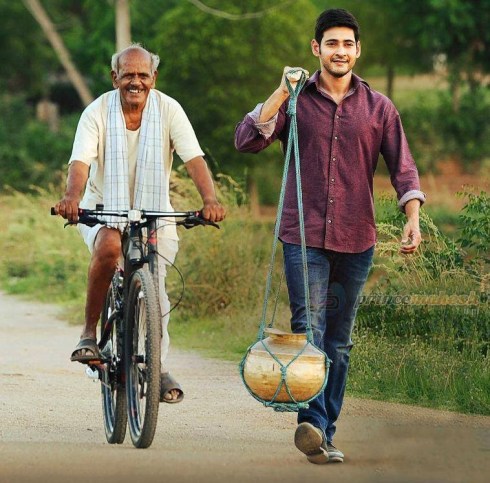
Srimanthudu [Wealthy Man] is one of the better Telugu Mahesh Babu movies I have seen. I downloaded it from Google Play and watched it on a flight (and finished up at the hotel.) It’s about a wealthy young man who goes to his ancestral village and saves the town from the evil goons running the place, as well as donating his millions to rebuild the village. It reminded me very much of Mirchi, one of my favorite Prabhas movies, and there’s a reason why. When I looked up Srimanthudu, I discovered that Mirchi and Srimanthudu have the same writer/director: Koratala Siva. Mirchi, amazingly, was Siva’s debut directorial feature film. Srimanthudu was also a major hit, and with good reason.
Mahesh Babu is Harsha, son of a super wealthy business tycoon played by Jagapathi Babu, who was absolutely fantastic in the role (he won a best supporting actor award for the role.) Mahesh Babu won the Filmfare South best actor award for his leading role in Srimanthudu. Mahesh’s love interest in the film is Charuseela – Shruti Haasan, master actor Kamal Haasan’s daughter. I was much more impressed with her here than in the Hindi film Gabbar Is Back.
If we didn’t catch from the get go that this princely son of a business king wants to live as a common man, his opening number is Rama Rama. His father won’t deign to celebrate at the festival with the company employees, but Harsha (Mahesh) makes a point of making an appearance and dancing along. He also gives money to a long time employee struggling to get his daughter married, and admonishes his father for not doing it himself. His father despairs for him ever taking the reins of the business empire. Harsha has no interest and mostly rejects his father’s Rolls Royce lifestyle by traveling by his eco-friendly bicycle.
One of the strong points of the movie is the first half romance between Mahesh and Shruti. He first spots her painting a Rangoli in her courtyard as he is driving his mother, aunt and sister to a temple early in the morning in the dark. He keeps driving around the block to catch more glimpses of her until his aunt complains that they’ll never make it on time. He then meets her at his friend’s birthday party, and sees that she is a kindred spirit because she takes the cake being delivered and gives it to some street children. What really intrigues him is that Charu is in a Rural Development course following her MBA. He’s never heard of such a thing, but it appeals to him immediately.
This is where Mahesh Babu’s inherent sweetness in romantic scenes shines through. He can really pull off going from sweet shy young guy around the girl he really likes, to a tough action fighter and commanding presence against bad guys all in the same movie with ease. Their falling in love song sequence I absolutely adored as it shows how they slowly hung around together more and more at school and it’s just adorable from start to finish as their romance deepens naturally and organically.
But the twist is that Harsha has never told her exactly who he is. Her roommates show her an article that reveals he is actually a super wealthy son of a tycoon, and she then rejects him utterly when he proposes. His father is from her same village, the one that she is studying how to save and develop. And with all Harsha’s father’s millions, Harsha’s family has done nothing. “Do you even know your village? You have no roots.”
Harsha just tells his family he will be traveling, but he goes straight to his ancestral village – by bike and bus. His traveling montage song is the title track Srimanthuda, and it is my second favorite song in the movie. The music in this film is really catchy and great.
Conditions in the village are horrible when he arrives. He doesn’t let anyone in the village know who he is, either, including the village leader, Charuseela’s father. But when he sees that they need a new school, he offers to donate the money needed. And then he sees more and more projects that need doing. He puts to use all he has learned in the rural development course.
As you can imagine, this does not sit well with the corrupt politician and his evil brother the enforcer who have run this town into the ground. Stealing even the water needed by the farmers for their liquor factory. There are some great action sequences as Harsha takes on all the bad guys single handedly.
Just like in Mirchi, when you go up against the rural village goons, be ready for a machete fight. Unlike most regional films, our hero actually gets injured enough to have to be hospitalized. Good thing he built that new hospital! But it’s a plot point to get his father back to the village, and for Charu to admit she still loves him.
Does he make his father proud? Does he get the girl? Does he save the village and vanquish the bad guys? I told you this was a Telugu film at the beginning, so you know the answers, but it sure is fun to watch it all unfold. And as an added bonus. Mahesh in a lungi! Hubba hubba.
Srimanthudu is a thoroughly enjoyable all around entertainer. Great family drama, truly evil substantial bad guys to fight, exciting action fight sequences and a terrific romance. It’s a four star out of five, and I’ve already rewatched it. It has a leg up on Mirchi in one way in that I really liked that there was only one romance, rather than the fake out first one we had in Mirchi.
My husband was walking through and he noted one of the irritating things about the film. I expect lots of slow-mo in my regional films, but this had tracking shots so many times when characters were speaking. “The camera is always moving!”, my husband noticed. It got distracting, especially on the rewatch. And the subtitle translations are just not the best sometimes for these Telugu films. I have a feeling what is being literally translated to English sounds very cool and slang in Telugu, but the subtitles end up ridiculous. “Return the money you stole or you will end up obese.” Wha??? Lost in translation there a bit.
I was intrigued to read in the wikipedia article the impact this movie had — people started adopting rural villages after seeing the film, including several celebrities and Mahesh himself. I really liked the message of the film, that it is the responsibility of the wealthy to give back, and to bring development to these backwater rural villages.
I’m now really looking forward to the director, Koratala Siva’s next film with Mohanlal and NTR, Janatha Garage, due out mid-August.
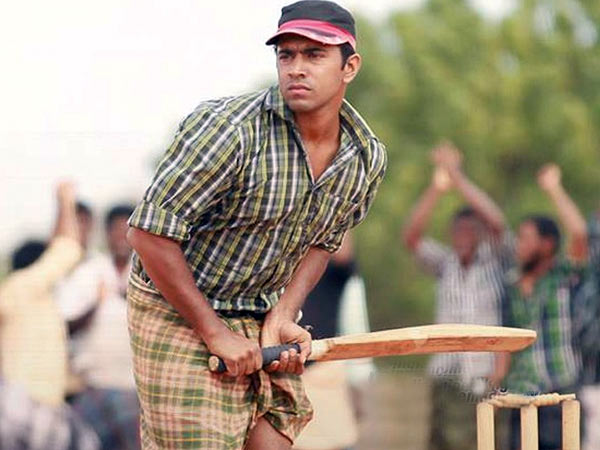
I’m not a huge sports movie fan, but 1983 was touching and enjoyable. I also don’t know anything about cricket, but that is no hindrance in watching Nivin Pauly’s love of the game.
The first half of the film shows us Rameshan (Nivin Pauly) as a child obsessed by cricket. There’s one TV in their small Kerala village and he and his friends are forever changed by India winning its first Cricket World Cup in 1983. They sneak away from chores and skip homework and studying for tests to play cricket together.
Nivin hits a girl in the head with an errant cricket ball, and has a wonderful childhood romance. But she’s good in school and moves on to university, while he is left behind in the village working for his father. He marries another girl in an arranged marriage, and horrors, she doesn’t even recognize a picture of Sachin!
In the second half, Nivin still plays club cricket with his old pals, and sees the glimmer of talent in his son. To the disgust of Nivin’s father, who still thinks cricket is a waste of time, Nivin seeks out coaching for his son. They take a bus hours away every weekend to the next big town to try for a spot in a sports school.
I don’t think I’ve ever seen Nivin Pauly play a father, and that was some of my favorite parts of the film. I also liked his relationship with his wife. She supports him and stands up for him with his parents. They don’t have a grand passion, but they work together as a couple.
This movie has the leisurely pace of Malayalam films. Maybe a little too leisurely at times. It’s not a surprise that this is the debut feature of the director, fashion photographer Abrid Shine. But it’s still an enjoyable watch, and Nivin Pauly, as usual is great. 1983 is beautifully shot, and even though I’m a no-nothing with cricket, I could follow the exciting parts of the cricket games. It wasn’t confusing to me as it sometimes is. Sometimes cricket games are filmed in Indian films expecting you to know what is happening, but here I could tell Nivin was good and the way the games were shot highlighted that.
Three and a half stars out of five. 1983 is available for rental on Amazon Video.
Many people recommended Jatt & Juliet on my quora post. After I saw Diljit Dosanjh in Udta Punjab, Jatt & Juliet moved to the top of the list. I was completely taken with Diljit in Udta Punjab, and he was one of the best things about that film. In Udta Punjab, he played a very quiet policeman who was shy in romance, but who could step up with the action when needed.
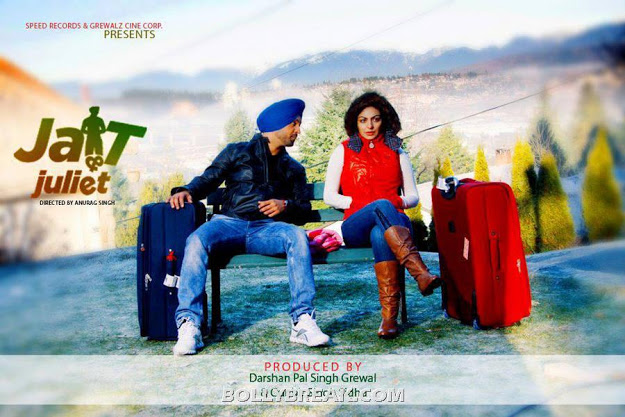
Diljit’s role of Fateh Singh in Jatt & Juliet is a bit different. It’s a romantic comedy and he has a zany manic energy that reminded me very much of Varun Dhawan in Humpty Sharma ki Dulhania. Margaret of Don’t Call It Bollywood compared Jatt & Juliet to DDLJ. It does have the hate to love similar trope in the first half of the film. But Diljit has this silly energy about him that reminded me more of Varun in Humpty — also because Pooja (Neeru Bajwa) is the rich girl that seems out of reach to Fateh.
Fateh’s goal is to marry a Canadian white girl and become a resident in Canada. He meets Pooja at the airport and the sit together on the flight where he annoys her no end with his antics and incessant patter. Pooja is flying to Vancouver to attend fashion school.
Pooja is robbed when she’s about to put down a deposit on an apartment. She hesitates to ask her parents for help because she doesn’t want them to tell her to come home. She and Fateh end up living in the same rental house. And then they end up working at competing next door restaurants. Pooja thinks Fateh is ridiculous with his talking to his biceps every morning, and he loves to tease and torment her, nicknaming her “pest”.
There is an annoying subplot in the first half where Pooja helps Fateh scam their landlady’s white step-daughter to try to get Fateh a white Canadian bride. That leads to both being kicked out of the rental house.
After the interval, they are both in dire straights and have to help each other. Their competing restaurants were once one, owned by an estranged married couple. They get the owners back together to save the restaurants from bankruptcy, and bond by working together.
This was what I loved about their romance. It wasn’t a bolt of lightning love at first sight. It was gradual. Little acts of caring. Sharing work together, and teasing each other, and the romance happening organically.
This is where the sweet Diljit I loved from Udta Punjab shone through in Jatt & Juliet.
Just like DDLJ, there’s another fiance for Pooja, and some misunderstandings on Fateh’s journey to get together with Pooja. It has a great ending.
These two actors have fantastic chemistry together, and I’m looking forward to watching Jatt & Juliet 2. Both films were mega hits in Punjabi cinema.
The negatives for me for Jatt & Juliet were some of the silly comedy side bits. Instead of a comedy uncle like in Telugu films, there was sort of a comedy cousin. Not that funny to me, but it may have also been the subtitles not portraying language play.
The other negative was that there weren’t enough songs! Diljit Dosanjh is a leading Punjabi rapper singer, and he just lights up the screen in the song sequences and dance numbers. I’m guessing it was the lower budget for a Punjabi film that limited the number of dance sequences, and maybe there are more in the sequel. This one was my favorite from a wedding in the film:
Three and a half stars out of five. I’m hearing that after Diljit’s Bollywood debut in Udta Punjab, that he is looking for more Bollywood roles. That’s great news, because he is a real talent. After seeing what he can do in this low budget dance song, I can only imagine what he would be like in a full blown Bollywood number.
After all the lack of diversity at the Oscars this year — not any actors of color and with no nomination for female director Ava Duvernay the year before, Academy president Cheryl Boone Isaacs has taken a very bold step to change the makeup of the Academy membership. Last year they invited a large number of new members, but this year goes way beyond that with a whopping record 683 new invited members, many of them women and people of color.
Cheryl Boone Isaacs
The list is really exciting! There are so many new women directors now in the group, and that may have the most impact. (Both Wachowski sisters were added.) I note many new women cinematographers, too. The total list had 46% women and 41% new members of color according to Variety.
Idris Elba, who won TWO SAG awards, and was shockingly not nominated for an Oscar for Beasts of No Nation was invited. Other names in the acting category popped out at me like
Nate Parker (for acting, but he’ll be up for directing and best picture next year).
Chadwick Boseman – “Captain America: Civil War,” “Get on Up”
John Boyega – “Star Wars: The Force Awakens,” “Attack the Block”
Michael B. Jordan – “Creed,” “Fruitvale Station”
Daniel Dae Kim – “The Divergent Series: Insurgent,” “Crash”
Regina King – “Ray,” “Jerry Maguire”
Freida Pinto – “IMMORTALS”, “SLUMDOG MILLIONAIRE”
and then Sharmila Tagore!
Among the directors, I was excited to see this name
Deepa Mehta – “MIDNIGHT’S CHILDREN”,“WATER”
And especially for Marielle Heller who directed the wonderful THE DIARY OF A TEENAGE GIRL
AND! Taika!
Taika Waititi – “HUNT FOR THE WILDERPEOPLE”,“WHAT WE DO IN THE SHADOWS”
Taika Waititi is also the director of the upcoming Thor movie. (Hunt for the Wilderpeople is amazing and is in limited release now in theaters.)
I saw Udta Punjab on my birthday which may not have been the best idea. Because it’s a very dark film. It’s taken me some time to process it and mull it over. I’m really impressed with the film making of writer/director Abhishek Chaubey. I enjoyed his film Ishquiya, and he was also a writer on Kaminey and Omkara. This film straddles the issue of drugs in the Punjab (the title means Punjab’s High or Punjab’s Flying) by telling the stories of four people affected by it.
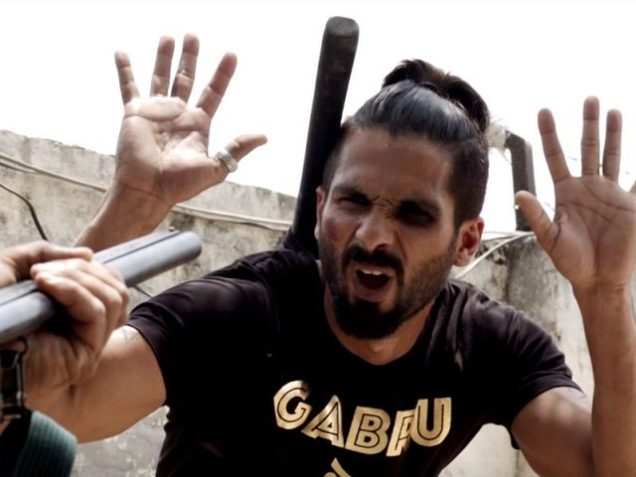
Alia Bhatt is a field worker who comes across a packet of drugs from Pakistan. Shahid Kapoor is a coke addicted rapper rock star who sings about drugs. Kareena Kapoor is a saintly doctor who runs a drug clinic, hands out needles and speaks out against the drug problem. And then there’s Diljit Dosanjh who plays a cop, complicit in looking the other way and taking bribes until he realizes that his younger brother is an addict.
This reminded me immediately of the Hollywood film Traffic that told the story of how the Mexican drug cartels impact four people. I actually have not seen that Oscar winning film, but I did see the BBC series it was based on, Traffik which dealt with drugs from Pakistan in the UK, and it’s a British politician’s daughter who is the addict. The story of Traffic/Traffik and Udta Punjab are not the exact same plot, but the intention is the same — show the impact through four different characters involved in the drug crisis in different levels. And show how the problem is very political. That is overt in Udta Punjab, and that’s why the Indian Censor Board demanded 89 cuts.
Abhishek Chaubey fought back, with the backing of other filmmakers and took it to the High Court. In the end, the only cut and change was re-editing a scene where Shahid’s rock star urinates all over his audience at a concert. Which we saw in the trailer!! I’m so glad this film was released on time and that it is basically exactly what the filmmakers wanted to show us. There was such a rush that the subtitles on the copy I saw still had some copy errors – when characters sang the subtitles were supposed to be italicized, but we saw typed out <i>.
I don’t want to spoiler the movie. The performances were amazing. Kareena Kapoor was well cast as the cool, collected doctor. I wasn’t surprised that she was good. After the bomb of Shaandaar (which I did enjoy parts of), Alia and Shahid are back with a bang. Shahid in Udta Punjab is acting at the levels he reached in Kaminey and Haider. His character is a rock star. He’s larger than life at nearly every moment, but he’s not just a comic caricature – Shahid manages to find some nuance and depth in the quiet moments, like when he’s arrested for lewd behavior and is thrown into a cell filled with criminals.
Alia Bhatt just keeps getting better and better. I thought she was a lightweight when I first saw her in Student of the Year, and she is very good in romantic comedy roles. But when she’s in a drama like Highway, she can really pull out the stops with some amazing scenes. And there are even more show stoppers in Udta Punjab. Horrible things happen to her in this movie, and it is her indomitable spirit that carries us through. I was stunned at what happens to her and how she just perseveres to the end.
But Diljit Dosanjh’s humble policeman was the revelation of the film to me. Diljit is big star in Punjabi films, but I have not seen him before Udta Punjab. I have had Jatt and Juliet recommended to me, and I’m definitely going to seek it out now. He was adorable in his timid romance with Kareena Kapoor’s doctor. He wants to be the hero, and show her he can make a difference. He’s trying to save his drug addict younger brother, as their father has died and he is the head of the house. He has amazing quiet everyman screen presence and then can be explosive when an action scene calls for it.
This is a film that left me stunned, as it has realism like you rarely see in Hindi cinema. It gives you a lot to think about. And it lays bare just how big the drug problem apparently is in Punjab. Udta Punjab already garnered a lot of press and talk just because of the censor fight. I hope now that everyone can see for themselves the content of the film, that it will spur conversations about the issues raised in the film.
Swiss Army Man was the craziest film we saw at Sundance 2016. (And we saw 22 films, so that’s really, really saying something.) I saw the trailer before my viewing of The Lobster this weekend, and that reminded me that Swiss Army Man is coming to theaters June 24th.
The film begins with Paul Dano trying to hang himself on a deserted island. A dead body (Daniel Radcliffe) washes ashore and begins to fart. Copiously.
Dano rides Radcliffes’ flatulent body like a jet ski off the island. This is the first 10 minutes of the film, and it sets the tone of magical realism. I don’t think I’ve ever been at a Sundance showing at Eccles Theater (the largest venue) with so many walk outs. I was seated 7 rows from the front, and two groups of 4 people in seats in front of ours walked out only half an hour into the film. From an article in Variety, they weren’t the only ones. And this was after there were huge lines of people trying to get in to the showing.
This film was very divisive at the fest. My husband hated it and found it juvenile. My 23 year old son loved it, and gave it four stars (out of four). I think it was his favorite of the whole festival. I was in the middle. I laughed quite a bit, but it wasn’t my favorite, by any means.
The title, Swiss Army Man refers to all the ways that Daniel Radcliffe’s dead body saves Paul Dano’s on their journey back to civilization. Strike a spark, and the farting corpse lights a fire. Dripping rain fills the body with drinkable water (gross!). The body begins to talk, and they have conversations on the meaning of life, and what it means to be alive. It’s philosophical, and crazy weird. The body sees a picture of a girl on Dano’s phone, and his erect penis becomes a compass. Really.
The acting is great, and I have to give kudos to Daniel Radcliffe for his physical work. He had to hold what looked like extremely uncomfortable poses as a dead corpse with a broken neck.
“The Daniels”, the directing duo of Daniel Scheinert and Daniel Kwan, won a special jury prize for directing this film at Sundance. I wasn’t familiar with them before the fest. Evidently, they “broke the internet” with their music video Turn Down For What. Daniel Kwan, one of the directing Daniels duo stars in the music video:
You, dear reader, have the advantage over all those festival goers at the premiere. You can watch the trailer below and decide if this is your kind of movie. It’s certainly one I will never forget.
I adored the absurd surreal film The Lobster. I missed it at Sundance, where it premiered in January. This is a love it or hate it kind of movie. I loved it, but some of the people walking out of my suburban theater HATED it. They really hated it. For me, it was just my cup of tea, and a welcome standout after a string of mediocre films I’ve seen this past week.
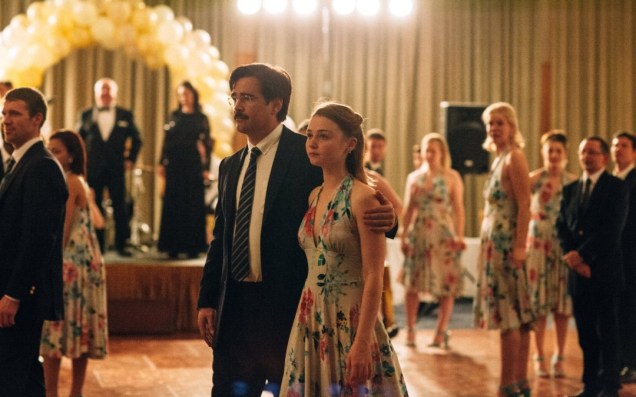
The film opens with a woman driving in the countryside in the rain. She stops her car, gets out and shoots a donkey in a field. Gets back in her car and drives away. It’s never referred to again, but that sets the tone of how absurd this world is that Greek writer/director Yorges Lanthimos has created. We then first see David (Colin Farrell). His wife is breaking up their 12 year marriage for another man. And that means he has to leave immediately to be taken away to “The Hotel” to be paired up with another woman. Singles and loners are not allowed in this near future dystopian world.
When David arrives at The Hotel (in County Kerry, Ireland), the manager (the always exceptional Olivia Colman) explains the rules to him. He has 45 days to find a new mate or he will be turned into an animal. He chooses a lobster, because they can live for 100 years and he’s always liked the sea. “Excellent choice.” He is warned that if he doesn’t find his true mate in time, he cannot couple after he is transformed if she picks another animal. “A wolf and a penguin could not couple because that would be absurd.”
This film is populated by so many of my favorite character actors. Olivia Colman of The Night Manager. John C. Reilly is a man with an unfortunate lisp. Ben Whishaw has a limp. Ashley Jenkins of The Extras is known as “Biscuit Woman”. Couples must come together with the same distinguishing characteristic. Limping Man (Ben Whishaw) bangs his head against tables to get nosebleeds to pair with a woman with that frequent malady. All the single residents of the hotel must go out on hunts into the woods with tranquilizer guns to search for “loners”.
If they catch a loner, they can extend their stay at the hotel. One unfeeling woman has bagged so many loners that she has an extra 160 days. David (Farrell) has brought his brother with him, who has been turned into a dog.
Every one of the actors delivers their lines in a quirky deadpan manner. I think that’s what inspired some of the hate of my fellow viewers at the theater, but I just thought it added to all the absurdity. These actors commit to the bizarre rules of this film world. It borders on absurd comedy, and then there are some sudden scenes of violence or drama. Lisping Man is punished for masturbating in his room, by having his hand forced into a toaster, for instance.
David escapes and becomes part of the Loner band in the forest where he meets Rachel Weisz. They have to pretend to be a couple to venture into the city for supplies, and David enthusiastically falls into the playacting and kissing. The young woman leader of the Loners is just as strict in her no fraternizing rules as the manager of The Hotel had been with her coupling rules. Farrell and Weisz plot together to escape.
The ending was a fade to black that left you hanging a bit, and was my most unsatisfying moment of the film. The rest was just fantastic. Colin Farrell gained 40 pounds for this movie. He has quite the paunch and “dad bod”. I think he relished being more of a character actor leading man in this film. I thought he was so good, as was the always great Rachel Weisz.
This film is not for everyone. But if you love absurd surreal “Sundance” kinds of movies, this will be right up your alley. Four and a half stars out of five.
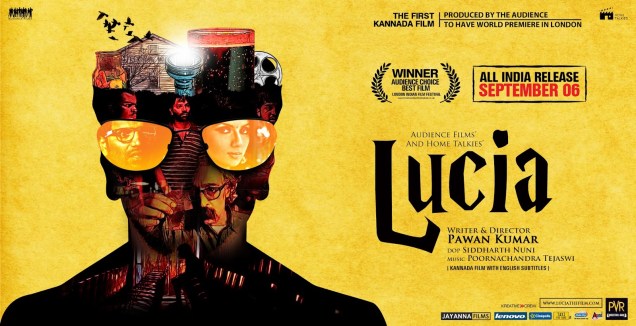
U Turn is a Kannada language supernatural suspense thriller written and directed by Pawan Kumar. Pawan Kumar blew me away with his amazing low budget Kannada film Lucia. Lucia had twist after twist and I never knew what was going to happen next.
U Turn starts upside down. Literally. We see the divider of a road, and the camera travels along it, but upside down as the opening credits roll. Then the camera does a u-turn and continues to travel the urban highway. Throughout the film there are ‘U’s sprinkled around, both in the visual framing of shots, and horseshoe knockers on doors, etc.
Shraddha Srinath, the star of the film, is introduced to us in a really clever way. Rachana (Srinath) is riding in a rickshaw with her mother, and through their arguing we learn that she’s single, that her mother is pressuring her to marry, that her family is going away on a trip, and thus she will be alone. It’s a really clever bit of writing. She draws the rickshaw driver into the argument, showing us a bit of her moxie and personality.
Rachana is an intern reporter at The Indian Express. She’s working on a story about people who make illegal u-turns on the flyover highway, moving the divider bricks out of the way, but not returning them after they make the turn. She has a homeless guy at the intersection writing down their license plate numbers. She goes to interview one of the drivers but he doesn’t answer the door.
Later that night after she is dropped off from her first date with the crime reporter, Aditya (Dilip Raj), the police come and arrest her.
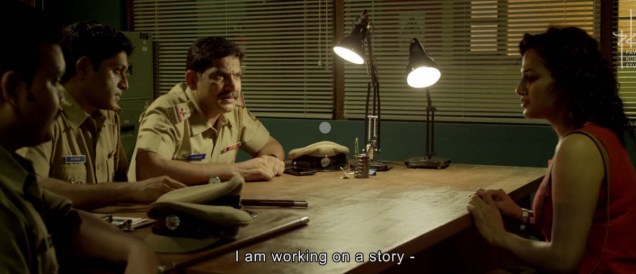
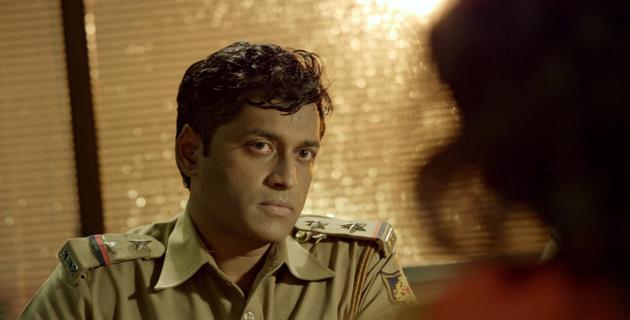
The police interrogate her as she had written her name in the visitor book, and is the last person to visit a man, found hung in his apartment. They don’t believe her at first that she is a reporter and working on an investigative story. Finally, the young cop, Nayak, listens and checks out her version of events.
Roger Narayan played Nayak and he was my favorite actor in the whole movie. He was great, and had a lot of subtle reactions. You can tell he has a bit of a crush on Rachana, but he plays someone trying to hold it back, but still let’s you see it.
I admire Pawan Kumar for turning some conventions on their head. Rachana is the active heroine of the script, and later her boyfriend Aditya takes on the ‘damsel in distress’ role, and she tries to save him. Shraddha Srinath did a good job carrying the film, and while he doesn’t have as much screen time, Dilip Raj shone in his supporting role.
I saw U Turn in a theater, and while there were a few jumps that scared me, the film just didn’t have enough suspense or thrills for me. It’s based on a real incident, evidently, but the film did not have the magic of Lucia for me.
Part of the problem was the score. The background music is critical in a suspense film, and this music just did not evoke the creepiness or scariness that it should. The recent low budget Tamil film Pizzahad not only music but a soundscape that added greatly to the creepiness.
Don’t believe me what a difference music and soundscape can make? Watch this Scary Mary Poppins trailer with some different music:
U Turn is a good film, but it just wasn’t as scary and creepy as I was hoping it would be, or as mind-bending as Lucia.
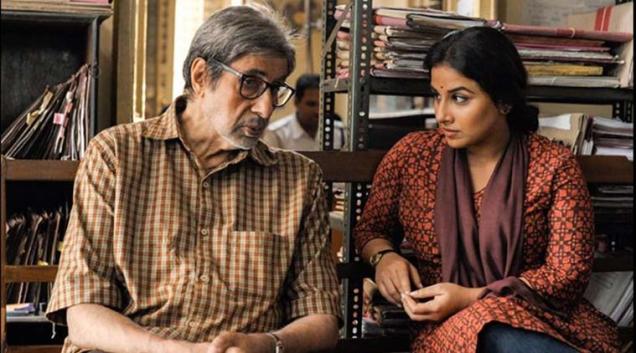
Te3n is a Hindi thriller starring Amitabh Bachchan as the grandfather of a young girl who was kidnapped and killed 8 years ago. He can’t let the unsolved case go, and visits the police station every day for an update. Vidya Balan is the police detective who tries to gently get him to move on.
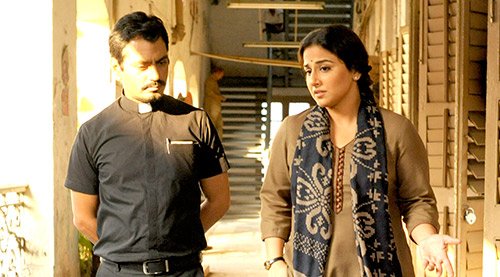
Nawazuddin Siddiqui was the police officer investigating the case 8 years ago, and botched it. He has since become a priest, and Amitabh (John) also torments him regularly about the cold case.
Amitabh neglects his disabled wife, the bills and regular life in his obsession to find justice for his granddaughter. He uncovers what he believes is new evidence in the case, and gets Martin (Nawaz) to accompany him to track down more clues.
Then another young child is kidnapped, and the details of the case seem to be an exact copy of the case of John (Amitabh)’s granddaughter. Vidya calls on Martin (Nawaz) to help her find the kidnapped boy.
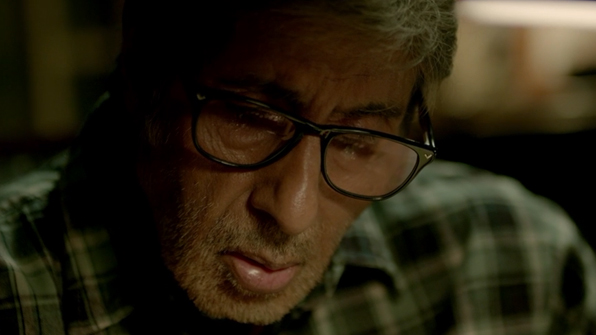
What this movie got right was the obsession that family members can fall into, especially the elderly, with an unsolved case. Our family happens to have a missing person/probable murder cold case. Having a tragedy like that hanging over a family can take a heavy toll. Amitabh lets all the despair and pain show in this movie. His wife, and every one urges him to just let it go, but he can’t. He just can’t.
Te3n is written and directed by Ribhu Dasgupta and produced by Sujoy Ghosh of Kahaani fame. It’s an authorized remake of the Korean film Montage, which I have not seen. Te3n is set in Calcutta, but just never manages to reach the level of suspense and tension of Kahaani, or true surprises. Here you have three of my favorite Indian actors in Hindi cinema, and while the film is good, it’s not as great as I was hoping it would be. The ending was a satisfying conclusion to the thriller, but I had some unanswered questions.
Amitabh’s John is fleshed out, but I was left wondering if it was just this one case that led Martin, Nawaz’s former cop character to become a priest.
 Naman is the leader of his Bangalore college quiz team, and the leader of nerds in the same way Anthony Michael Hall was the leader of his group of nerds in Sixteen Candles. They delight in throwing trivia at each other and quoting Noel Coward.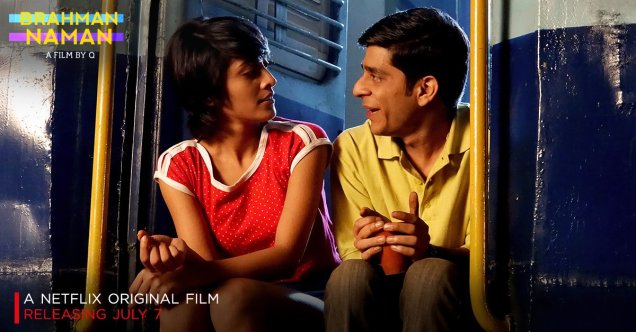





















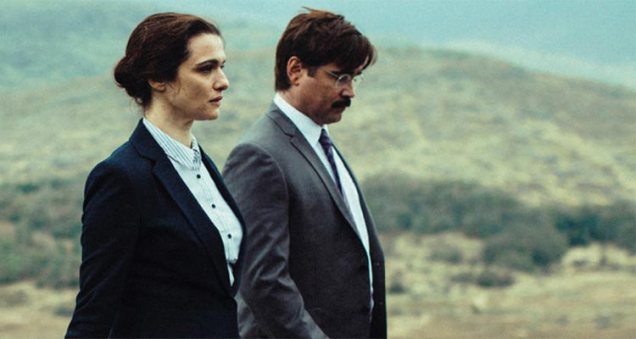 David escapes and becomes part of the Loner band in the forest where he meets Rachel Weisz. They have to pretend to be a couple to venture into the city for supplies, and David enthusiastically falls into the playacting and kissing. The young woman leader of the Loners is just as strict in her no fraternizing rules as the manager of The Hotel had been with her coupling rules. Farrell and Weisz plot together to escape.





 Pardesi Reviews