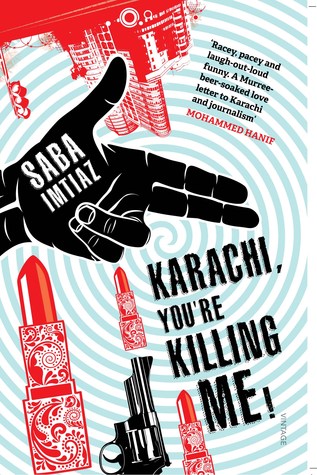
I was catching up with the The Bollywood Project podcast, and in their movie news, they mentioned that Sonakshi Sinha has started filming her next project, Noor, based on the 2014 Pakistani novel, Karachi, You’re Killing Me!
But then they started listing the cast, and stand-up comedian Karan Gill of Youtube’s Pretentious Movie Reviews is making his Bollywood debut in Noor.
Noor is due out this fall, and will be a comedy thriller. Sort of Bridget Jones Diary set in Karachi, and Kanan Gill plays Sonakshi’s good friend Saad. (Here’s hoping he ends up MORE than a good friend.)
Kanan Gill had an adorable Shaadi.com ad last year:
But this break is huge. So happy for him, and excited for me!
Also, I’ve been watching his Office like web series Better Life Foundation. Hilarious!!
Sonakshi is on Snapchat as @AsliSona and Kanan as @kanangill. They both post really interesting stuff.
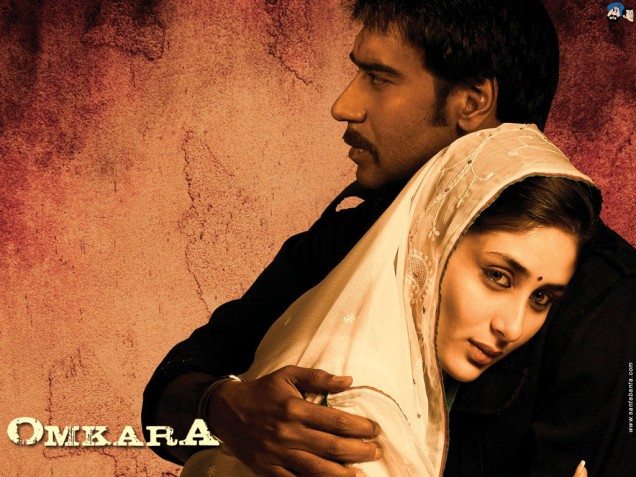
I was blown away by Vishal Bhardwaj‘s Haider, an incredible adaptation of Shakespeare’s Hamlet starring Shahid Kapoor. Omkara is part of his Shakespeare trilogy (Maqbool, Omkara, Haider). Omkara works extremely well as a modern adaption of Othello in rural Uttar Pradesh India. This is a stellar cast, and some of the best performances I’ve ever seen of some of these actors. I have been sitting on this DVD for Netflix for some time. I knew it was going to be excellent from everything I’d read, but it is such a depressing story!
I think I read Shakespeare’s Othello play in school, but to be honest I’m more familiar with Verdi’s masterpiece opera Otello, which I’ve seen a few times at the Lyric Opera in Chicago. Otello focuses much on the relationship of Desdemona and Otello and the intense emotions and drama lend themselves very well to opera. It became a signature role for Placido Domingo, even if it’s a bit bizarre to see blackface in a modern stage production. Giuseppe Verdi is like Vishal Bhardwaj in that he adapted Shakespeare in three Italian language operas: Macbeth, Otello and his final opera Falstaff.
The music added to a play like Othello only enhances the inherit drama, and if it works so well in opera, then I knew it would translate well to an Indian drama. The music enhances the contrast between the love between Omkara (Ajay Devgn) and Dolly (Kareena Kapoor) and then the final death scenes.
Otello the opera starts in the middle of Shakespeare’s play and skips the early statecraft plot points, and the bits with Desdemona’s (Dolly’s) father. But Bhardwaj keeps that all in, to great effect. The opening scene shows Langda (Saif Ali Khan) [Iago] telling Dolly’s groom Raj that his bride Dolly is not going to show for the wedding, Omi (Omkara) has stolen her away. There’s then a confrontation between Dolly’s father, and Omkara. Ajay has a dramatic entrance wearing a black shawl that looks like a big cape. Dolly’s father doesn’t intimidate him in the least, and then there is a scene where Dolly admits to her father she went willingly to elope with Omi. Ajay Devgn is naturally darker skinned than many actors in Bollywood and Kareena Kapoor has very light skin. The Indian update to Othello being a “Moor” is that Omkara is half-caste, his father a Brahman and his mother a low-caste mistress.
Omkara (Ajay) is described as a Bahubali. When I first heard this word in the movie, my ears pricked up because I’ve never heard the word except, of course, in the Telugu blockbuster Bahubali. In the subtitles of Omkara, it’s translated as General. I looked up the wikipedia article and this is how Omkara’s character is described:
Omkara Shukla or Omi (Ajay Devgan) is a bahubali, a sort of political enforcer. He is the leader of a gang which commits political crimes for the local politician
So interesting! As I thought that was a Telugu word specific to Rajamouli’s movie.
Omkara is a powerful political goon, and Langda (Iago) and Kasu (Cassio) are his lieutenants. After Omkara elminates a political rival, their Bhaisaab (Naseeruddin Shah) is going to be the next representative at the national level, and Omkara will take his place at the state level. There’s a ceremony to name Omkara’s successor, and the younger Kasu is picked to be the next bahubali over Langda. Kasu is picked because of his connections to the youth and college students. This is the source of Langda’s plotting and burning jealousy, that he was overlooked for this promotion, just as in Othello. Again, the parallels Bhardwaj draws to the rough and tumble of Indian politics work so well, and this is definitely a realm of people taking offence to violent deadly extremes over slights of honor.
We’ve seen Omi (Ajay) be dominant, and quick to kill when someone offends him or insults his relationship with Dolly. But we also see what a different loving person he is with Dolly. Bhardwaj also composed all the music in the film. This love scene has Omi coming to Dolly in anger after seeing her with Kasu, but her singing him an English love song (very badly) spurs this teasing chasing scene. It’s one of my favorite sequences in the whole film. With no one else can Omi show this tender side of himself. But one key difference in Omkara to Othello is that Omi does not marry Dolly right away. He has abducted her, taken her to his home village and seduced her but drags his feet a bit on the wedding itself. So Dolly is in a very precarious position, separated from her family.
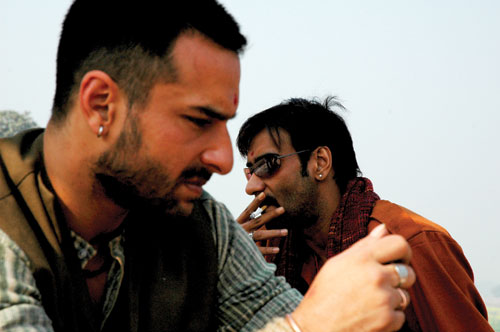
Saif Ali Khan is so excellent as the diabolical Langda. (Langda means limp in Hindi, and he is described as having a leg and a half.) He is Omi’s most trusted lieutenant and advisor, and cannot abide being passed over for the young Kasu. I am really not a Vivek Oberoi fan to be honest, but he was perfectly cast as Kasu. Saif also is no pretty boy here. His teeth are stained from betel leaves, and he has a roughness about him, not his usual suave film persona.
This is Saif Ali Khan’s finest role ever, in my opinion. I think he mostly does action movies like Phantom at this point, and I wish he would not be so lazy and take on more work like this. When he wants to, he really has the stuff. He relentlessly manipulates Omi into thinking Dolly is cheating on him, gets Kasu drunk to disgrace him and so on. When you have Ajay as Omkara, you need a worthy Iago, and Saif is just fantastic as Langda. You hate his guts utterly, but admire the acting.
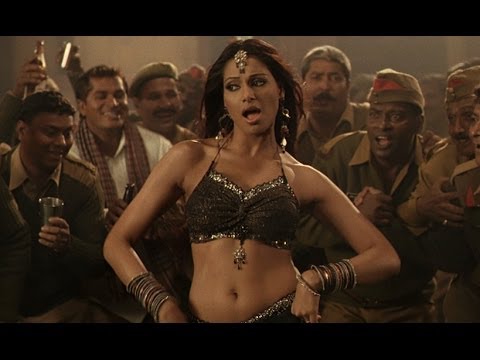
I don’t have to tell you the outlines of the plot, and it’s pointless to talk about spoilers with a plot hundreds of years old. But it’s interesting the Indian touches that Bhadwaj adds to the story. Instead of the damning handkerchief of the original play, there is an heirloom bridal belt adornment that Omi gives to Dolly to wear, Langda steals and gives to Kasu, who then gives it to his girlfriend (Bips, our item girl.) Omi completely loses his shit when he sees this loose woman shaking her tail feather wearing the family’s heirloom. There’s also a clever modern touch with stolen cellphones leading to further misunderstandings.
Kareena plays the innocent Dolly so, so well. She’s completely loving, and just bewildered at Omi turning on her. But she has her honor, too. In their final scene, when faced with Omi’s wild accusations of adultery on their wedding night, she says, “Then you’ll have to kill me.” It’s devastating.
Ajay Devgn can be so brutal on film. We’ve seen him play many mafia type leaders in movies. If there’s any actor that can play someone who the audience believe would kill his own bride in a fit of jealous rage, Ajay is the one who can truly pull it off. But Omkara shows his tenderness, his quick temper, and then his utter desolation as the truth of Langda’s machinations are revealed in the final scenes.
I don’t really remember if Othello’s sister had as large a role in the original play, but she warrants his final duet in Otello the opera. Konkona Sen Sharma is a standout in a stellar cast in Omkara. She is Langda’s wife Indu, and a tough woman in her own right. She is a friend and support to Dolly, willing to battle her brother when she sees Dolly bruised. And it’s not Omi that finally serves justice on Langda but Indu. Thank you Bhardwaj for including that and giving Konkona Sen such a powerful moment. In the original play, his wife is what leads to Iago’s arrest, but that’s not the kind of swift justice meted out in Omi and Indu’s village.
This film is dark. Almost relentlessly so, but the acting performances are absolutely fantastic. This film won award after award, and rightly so.
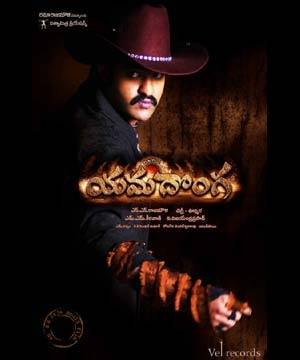
I purchased the Telugu film Yamadonga [God of death thief or Thief Yama] on DVD months ago because it was highly recommended by a friend. I kept picking it up, and putting it back down. Frankly, the cover image doesn’t do anything for me. But I forgot that I bought it because it is by director S. S. Rajamouli (of Baahubali fame!) Yamadonga came out in 2007 (between Chatrapathi (2005) and Magadheera (2009)). Yamadonga was my first Jr. NTR film, but his third collaboration with Rajamouli.
Chatrapathi has that amazing CGI shark fight with Prabhas, and Magadheera anticipates Baahubali with its lengthy past life fantasy flashback. And then of course, Rajamouli made the hero reincarnate as a FLY in Eega. His imagination has no bounds, and continues to amaze me with every film. I was blown away by Baahubali, which I saw four times in the theater alone, and cannot wait for part 2 next year. Yamadonga is a delightful flight of fantasy as a thief insults Yama (the God of Death) and is sent to hell before his time.
Jr. NTR is no Prabhas (my favorite Telugu actor), but he definitely has an impish charm. I was trying to think what Hollywood actor he reminds me of. He’s sort of like Chris Pratt – looks cool in the action sequences, but has that charm and sense of comedy silliness about him.
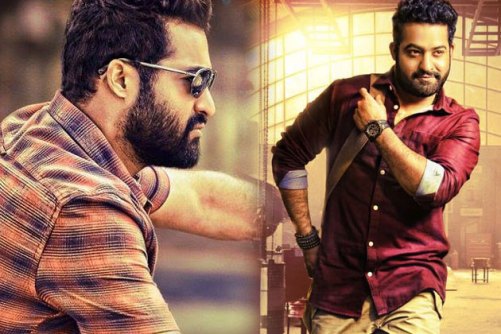
Jr NTR in Janatha Garage
I know this is shallow of me, but I hated NTR’s hair in this film. It just looked awful. There were a few music numbers where his hair was much shorter, and he looked a thousand times better. He has that same look in the poster for his next film Janatha Garage (with Mohanlal) coming out next month.
As children, the thief Raja (Jr. NTR) meets Mahi. She gives him an amulet necklace that had been blessed in a temple. He can’t pawn it, and throws it away, but over his life, it keeps turning up.
Mahi (Priyamani) grows up and is an orphan treated as a servant in her family’s household. She’s sort of a Cinderella waiting for her prince. (Isn’t it handy NTR is named Raja?) NTR rescues her but then tries to ransom her to her family when he sees a TV report that she is a wealthy heiress (which she doesn’t know.)
For the first time, Mahi who had been treated as a servant, is waited on like a princess by Raja. Raja has cursed Yama (the God of Death) to the heavens, and Yama vows revenge on this human. Raja is killed before his time by goons sent by Mahi’s family and then half the movie is set in the fantasty realm of hell. Raja is a thief by nature, and tricks Yama and steals his rope of death, becoming the ruler of hell himself.
The modern day parts of Yamadonga aren’t that different in plot than any other Telugu action romantic film, although the action scenes are great. But the film takes off in the fantasy hell sequence and in a scene in heaven with all the gods. The sets are glorious. Mohan Babu is fantastic as the insulted god Yama. The comedy uncle of pretty much every Telugu film, Brahmanandam, is Yama’s sort of clerk Chatragupta keeping track of the book of deeds of the human sinners.
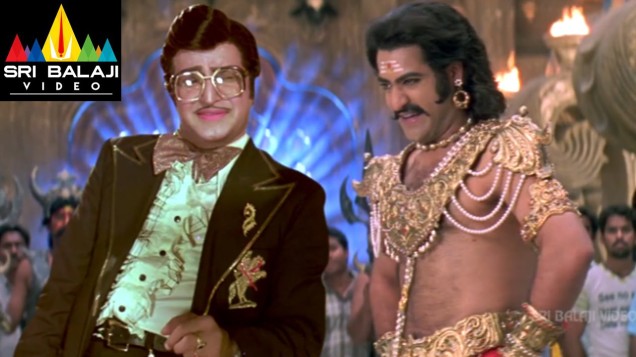
Raja proposes an election to have the demons of hell pick their new ruler between Yama and Raja. Yama brings three goddesses to dance, but then NTR as Raja dances with them and brings out the spirit of his grandfather. Jr. NTR is the grandson of the famous actor and (then politician) NTR. Rajamouli uses CGI to have Jr. NTR and NTR talk and dance together onscreen (like Dhoom Taana in Om Shanti Om). This Young Yama song reminded me of the song Manohari in Baahubali with NTR dancing with the three women.
NTR is a great dancer (he’s accomplished in Kuchipudi dance), and this sequence was one of my favorites in the film.
Raja returns to earth, but if he sins again, he will be returned to hell. He’s about to marry Mahi, when Yama decides to trick Raja into sinning. Yama takes the form of a woman to tempt Raja – Raja’s former partner in crime and money lender.
Mamta Mohandas as Dhanalakshmi
Mamta Mohandas is Dhanalakshmi (Yama in disguise), and I loved her portrayal. She’s seductive, but she has the air of Yama’s arrogance and swagger at the same time.
That’s the thing about this film. Not only is NTR great, but so many of the supporting actors are simply fantastic. Priyamani‘s performance is just okay as the innocent naive Mahi. She has some great dance numbers with NTR, but her acting was not on the same level with the others.
I had so much fun watching this movie. Rajamouli never disappoints, and NTR provides a lot of comedy, great dancing and cool action scenes. I have never seen a Ramayana TV serial, and I’m sure the hell scenes reference some of those, or Ram-Leela pageant plays. But you don’t need that background, or even an understanding of the Indian gods to enjoy this film.
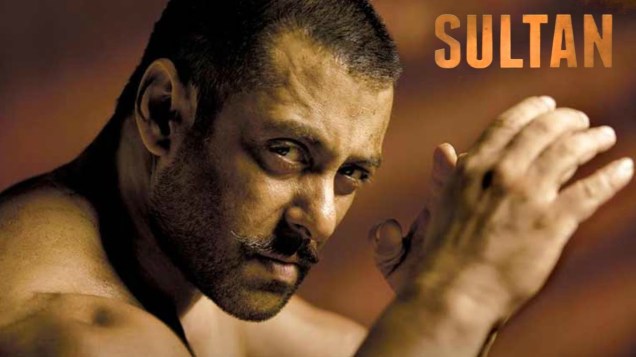
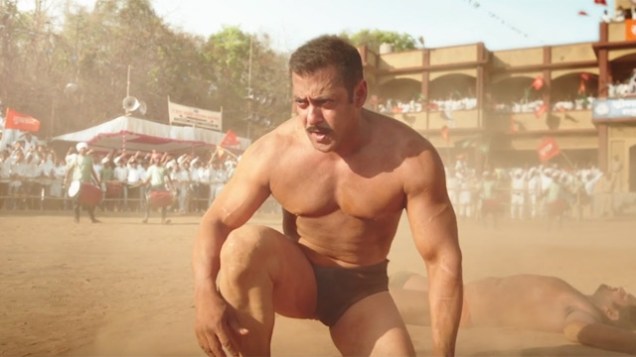
If it’s Eid, it must be time for the big Salman Khan movie! There has been so much hype around Sultan, for months and months, and one can’t help but worry that the movie won’t meet the raised expectations. But thankfully, it does! Margaret of Don’t Call It Bollywood and I saw the movie together at the Indian MovieMax theater about 45 minutes from me. It was quite the experience to see it opening night with a big crowd all dressed to the nines for Eid festivities they were going to after the film.
For me, Dabanng and Bajrangi Bhaijaan are two of my favorite Salman Khan movies, and some of his best work. Sultan is good. It’s very good, but for me, it’s not quite at the same level as those two movies. Salman’s acting has moments of greatness in Sultan, and Anushka Sharma is simply amazing. But the musical numbers in Sultan, while good, are not jaw droppingly great like in Dabanng and Bajrangi Bhaijaan. Selfie Le Le Re and Tere Mast Mast Do Nain are extremely high bars to beat, however. The songs in Sultan are pretty catchy, but I’m not running out to download the soundtrack, to be honest.
Also, as I mentioned in my review of 1983, sports movies are not really my thing. So a wrestling movie on top of a Mixed Martial Arts movie is not really my go to genre. But it’s a measure of the strength of the movie, that I was completely sucked in. My friend Margaret of Don’t Call It Bollywood have been wondering about the clues of the plot that we could see in the trailer. Obviously there was some sort of tragedy in Sultan’s life, and we dreaded that he might be a widower in the second comeback half of the film. I won’t spoiler what that tragedy is, but I can tell you that there is a happy ending and Anushka’s character does not die.
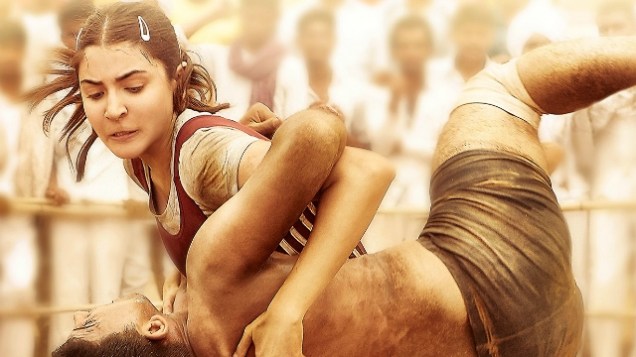
I also wondered why Anushka Sharma agreed to be in a Salman Khan movie. Her character is fantastic — a super strong wrestler, tough as nails, dominant even in a room of guys including Salman, and a fully formed character with her own flaws, firm to the point of being rigid at times. I’m so glad she took on the challenge of this film. She just keeps getting better and better with her acting in each film.
Salman meets her by knocking her off her bike and then hitting her helmeted head, not knowing she’s a woman. Then she takes off her helmet and wallops Salman, as he stands there love struck. He pursues her, but she rejects him as a suitor, telling him that he quite simply doesn’t measure up. She is driven and has her goal to get to the Olympics, and he is just aimless. Let me just say, watching Anushka verbally destroy Salman was really something to see.
Their romance is what spurs Sultan to be a better man to win her. To become a championship wrestler. I loved their romance storyline, and Salman being sweet loving Sultan is fantastic. What tears them apart is the key to him giving up wrestling. Again, I won’t spoiler it, but those moments I really teared up, and were some of the most powerful in the film for me.
The framing of the comeback is that Amit Sadh is trying to get MMA off the ground in India, and needs an Indian fighter. (Why haven’t we seen Amit Sadh more? – glad to look up and see he’s in the upcoming Akira.) Randeep Hooda is the coach that trains Sultan in MMA. Cue Rocky training montage. (Seriously, there are so many Rocky homages in this film.)
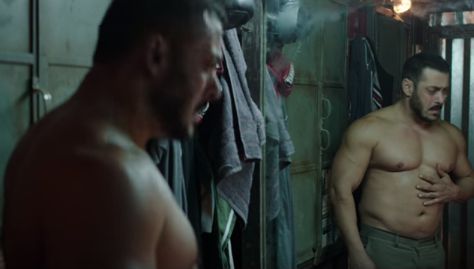
You’ve seen the scene in the trailer where Salman stares at his overweight belly in a mirror and breaks down. What the trailer doesn’t show is that he then struggles to get his shirt back on, fighting with the sleeve as he cries hard. It may have been the single best acting scene I’ve ever seen Salman do.
While the movie is pretty wonderful, there were some off moments. Two of the MMA fighters are black, and at a press event the announcers refer in English (not just bad subtitles) to their owners, and not sponsors. WTF?? Also, Salman refers to a the lightning quick style of one black fighter this way – “Is he more gorilla or chimpanzee?” Again. W. T. ever-living F.??
That nonsense aside, the last fight is riveting, and I didn’t know what was going to happen which is uncommon in a sports film, believe me. Much better MMA fights (like I would really know?) than last year’s Brothers. It’s solid entertainment, and you’ll leave satisfied.
Brahman Naman is an absolutely hilariouos teen sex comedy set in the 80’s. It’s the Indian Superbad or American Pie with major homage to John Hughes movies, too.
Naman is the leader of his Bangalore college quiz team, and the leader of nerds in the same way Anthony Michael Hall was the leader of his group of nerds in Sixteen Candles. They delight in throwing trivia at each other and quoting Noel Coward.
The film opens with Naman waking up in the middle of the night to masturbate in the refrigerator door, wrapping his arms around the appliance to held the door tight. Really.
The film is mostly all in English with the occasional “yaar” or other term. Naman and his friends are Brahman, and there’s a sweet scene of him doing rituals with his father. Ash, is a nerdy girl who yearns to be on the quiz team with Naman and his friends, and has a major crush on Naman that is not reciprocated. He uses every excuse in the book to avoid her, even though his friends point out that she is Brahman, too.
The boys are sex obsessed, but don’t have today’s internet porn. All they have are racy magazines and sneaking into porno movie theaters. Naman has an elaborate gadget attached to his ceiling fan for a masturbation aide, but the ultimate was his putting his erect penis into a fish tank and the ejaculation was shown in close up. (!!!) Netflix bought the movie, and I wonder if that scene will need to be edited out even for streaming.
For all their bravado, the boys run away from being set up with a prostitute for their first real experience.
My favorite part of the film, however, is when their quiz team takes a trip to Calcutta for a quiz competition. On the train they meet a female team from Chennai, and Naman falls for the leader, Naina. As his friend points out, she is Naman in female form, cutting him down to size with her wit.
I was probably the only one in the Sundance theater to recognize Biswa Kalyan Rath from the Pretentious Movie Reviews team. He’s a standup comedian in India, too, and has the small role in the movie as a guy at their college always trying to impress Naman and his pals with his sexual exploits on trains, planes, etc.
It’s an enjoyable comedy. and although my son was confused by the references to Brahmans and caste, I thought the film does a good job pointing out the issues with jokes understandable for non-Desi’s.
At the Sundance showing after the film, I asked the director, Q, about censorship of films in India and he went on a rant about the restrictive censor board. This is certainly not like any Indian film I’ve ever seen. Q said in a recent interview “that the film is far from misogynistic. “We’re showing the boys for who they are — sexually starved and confused. And at the same time, we give women power. What you expect is definitely not what you’ll end up with,” he promised.”
Highly recommend this quirky film. Four stars out of five. Available July 6 streaming on Netflix!
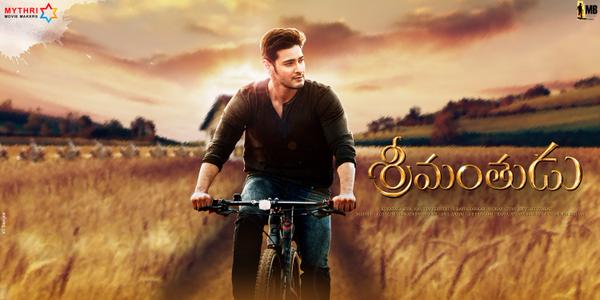
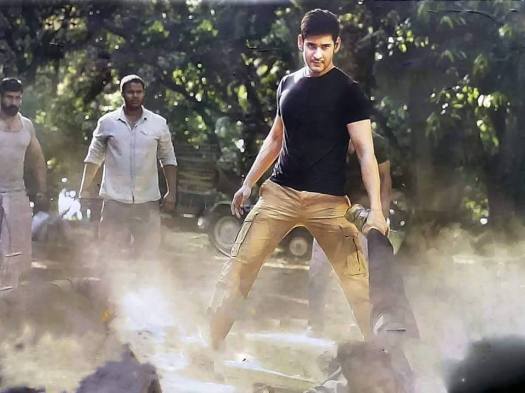
Srimanthudu [Wealthy Man] is one of the better Telugu Mahesh Babu movies I have seen. I downloaded it from Google Play and watched it on a flight (and finished up at the hotel.) It’s about a wealthy young man who goes to his ancestral village and saves the town from the evil goons running the place, as well as donating his millions to rebuild the village. It reminded me very much of Mirchi, one of my favorite Prabhas movies, and there’s a reason why. When I looked up Srimanthudu, I discovered that Mirchi and Srimanthudu have the same writer/director: Koratala Siva. Mirchi, amazingly, was Siva’s debut directorial feature film. Srimanthudu was also a major hit, and with good reason.
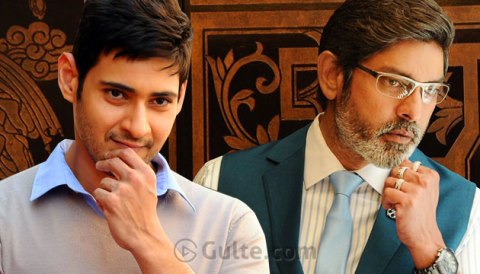
Mahesh Babu is Harsha, son of a super wealthy business tycoon played by Jagapathi Babu, who was absolutely fantastic in the role (he won a best supporting actor award for the role.) Mahesh Babu won the Filmfare South best actor award for his leading role in Srimanthudu. Mahesh’s love interest in the film is Charuseela – Shruti Haasan, master actor Kamal Haasan’s daughter. I was much more impressed with her here than in the Hindi film Gabbar Is Back.
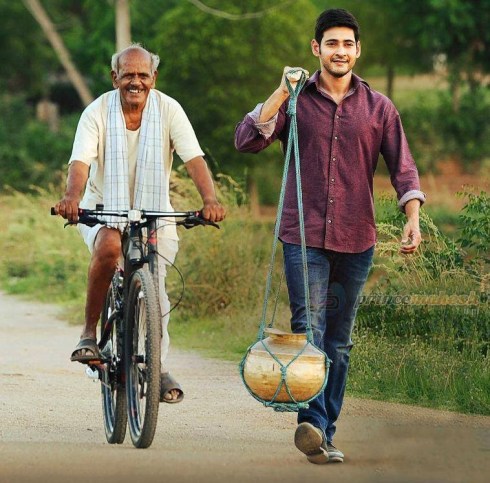
If we didn’t catch from the get go that this princely son of a business king wants to live as a common man, his opening number is Rama Rama. His father won’t deign to celebrate at the festival with the company employees, but Harsha (Mahesh) makes a point of making an appearance and dancing along. He also gives money to a long time employee struggling to get his daughter married, and admonishes his father for not doing it himself. His father despairs for him ever taking the reins of the business empire. Harsha has no interest and mostly rejects his father’s Rolls Royce lifestyle by traveling by his eco-friendly bicycle.
One of the strong points of the movie is the first half romance between Mahesh and Shruti. He first spots her painting a Rangoli in her courtyard as he is driving his mother, aunt and sister to a temple early in the morning in the dark. He keeps driving around the block to catch more glimpses of her until his aunt complains that they’ll never make it on time. He then meets her at his friend’s birthday party, and sees that she is a kindred spirit because she takes the cake being delivered and gives it to some street children. What really intrigues him is that Charu is in a Rural Development course following her MBA. He’s never heard of such a thing, but it appeals to him immediately.
This is where Mahesh Babu’s inherent sweetness in romantic scenes shines through. He can really pull off going from sweet shy young guy around the girl he really likes, to a tough action fighter and commanding presence against bad guys all in the same movie with ease. Their falling in love song sequence I absolutely adored as it shows how they slowly hung around together more and more at school and it’s just adorable from start to finish as their romance deepens naturally and organically.
But the twist is that Harsha has never told her exactly who he is. Her roommates show her an article that reveals he is actually a super wealthy son of a tycoon, and she then rejects him utterly when he proposes. His father is from her same village, the one that she is studying how to save and develop. And with all Harsha’s father’s millions, Harsha’s family has done nothing. “Do you even know your village? You have no roots.”
Harsha just tells his family he will be traveling, but he goes straight to his ancestral village – by bike and bus. His traveling montage song is the title track Srimanthuda, and it is my second favorite song in the movie. The music in this film is really catchy and great.
Conditions in the village are horrible when he arrives. He doesn’t let anyone in the village know who he is, either, including the village leader, Charuseela’s father. But when he sees that they need a new school, he offers to donate the money needed. And then he sees more and more projects that need doing. He puts to use all he has learned in the rural development course.
As you can imagine, this does not sit well with the corrupt politician and his evil brother the enforcer who have run this town into the ground. Stealing even the water needed by the farmers for their liquor factory. There are some great action sequences as Harsha takes on all the bad guys single handedly.
Just like in Mirchi, when you go up against the rural village goons, be ready for a machete fight. Unlike most regional films, our hero actually gets injured enough to have to be hospitalized. Good thing he built that new hospital! But it’s a plot point to get his father back to the village, and for Charu to admit she still loves him.
Does he make his father proud? Does he get the girl? Does he save the village and vanquish the bad guys? I told you this was a Telugu film at the beginning, so you know the answers, but it sure is fun to watch it all unfold. And as an added bonus. Mahesh in a lungi! Hubba hubba.
Srimanthudu is a thoroughly enjoyable all around entertainer. Great family drama, truly evil substantial bad guys to fight, exciting action fight sequences and a terrific romance. It’s a four star out of five, and I’ve already rewatched it. It has a leg up on Mirchi in one way in that I really liked that there was only one romance, rather than the fake out first one we had in Mirchi.
My husband was walking through and he noted one of the irritating things about the film. I expect lots of slow-mo in my regional films, but this had tracking shots so many times when characters were speaking. “The camera is always moving!”, my husband noticed. It got distracting, especially on the rewatch. And the subtitle translations are just not the best sometimes for these Telugu films. I have a feeling what is being literally translated to English sounds very cool and slang in Telugu, but the subtitles end up ridiculous. “Return the money you stole or you will end up obese.” Wha??? Lost in translation there a bit.
I was intrigued to read in the wikipedia article the impact this movie had — people started adopting rural villages after seeing the film, including several celebrities and Mahesh himself. I really liked the message of the film, that it is the responsibility of the wealthy to give back, and to bring development to these backwater rural villages.
I’m now really looking forward to the director, Koratala Siva’s next film with Mohanlal and NTR, Janatha Garage, due out mid-August.
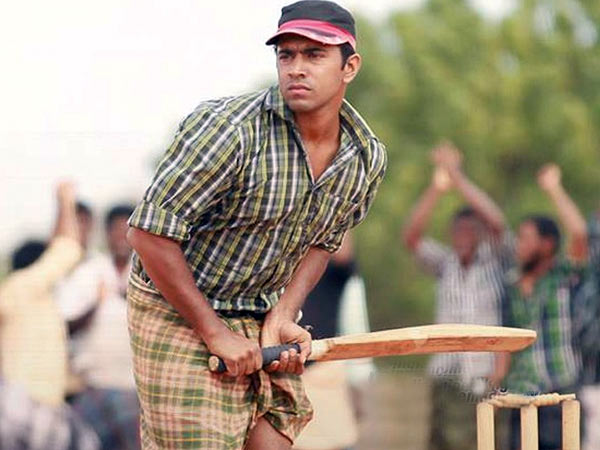
I’m not a huge sports movie fan, but 1983 was touching and enjoyable. I also don’t know anything about cricket, but that is no hindrance in watching Nivin Pauly’s love of the game.
The first half of the film shows us Rameshan (Nivin Pauly) as a child obsessed by cricket. There’s one TV in their small Kerala village and he and his friends are forever changed by India winning its first Cricket World Cup in 1983. They sneak away from chores and skip homework and studying for tests to play cricket together.
Nivin hits a girl in the head with an errant cricket ball, and has a wonderful childhood romance. But she’s good in school and moves on to university, while he is left behind in the village working for his father. He marries another girl in an arranged marriage, and horrors, she doesn’t even recognize a picture of Sachin!
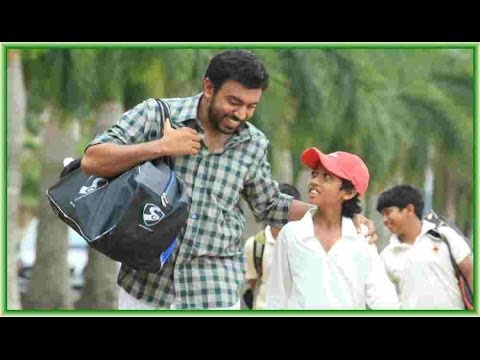
In the second half, Nivin still plays club cricket with his old pals, and sees the glimmer of talent in his son. To the disgust of Nivin’s father, who still thinks cricket is a waste of time, Nivin seeks out coaching for his son. They take a bus hours away every weekend to the next big town to try for a spot in a sports school.
I don’t think I’ve ever seen Nivin Pauly play a father, and that was some of my favorite parts of the film. I also liked his relationship with his wife. She supports him and stands up for him with his parents. They don’t have a grand passion, but they work together as a couple.
This movie has the leisurely pace of Malayalam films. Maybe a little too leisurely at times. It’s not a surprise that this is the debut feature of the director, fashion photographer Abrid Shine. But it’s still an enjoyable watch, and Nivin Pauly, as usual is great. 1983 is beautifully shot, and even though I’m a no-nothing with cricket, I could follow the exciting parts of the cricket games. It wasn’t confusing to me as it sometimes is. Sometimes cricket games are filmed in Indian films expecting you to know what is happening, but here I could tell Nivin was good and the way the games were shot highlighted that.
Three and a half stars out of five. 1983 is available for rental on Amazon Video.
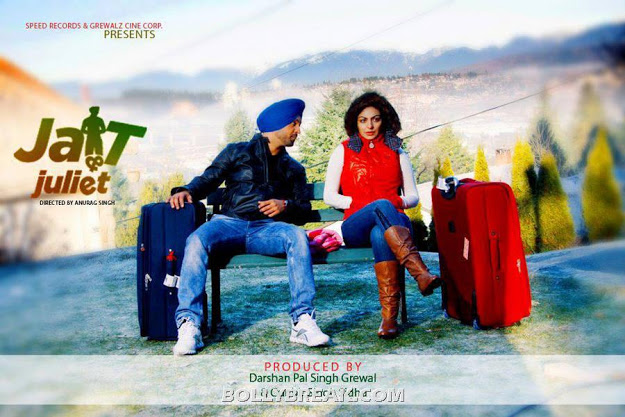
Many people recommended Jatt & Juliet on my quora post. After I saw Diljit Dosanjh in Udta Punjab, Jatt & Juliet moved to the top of the list. I was completely taken with Diljit in Udta Punjab, and he was one of the best things about that film. In Udta Punjab, he played a very quiet policeman who was shy in romance, but who could step up with the action when needed.
Diljit’s role of Fateh Singh in Jatt & Juliet is a bit different. It’s a romantic comedy and he has a zany manic energy that reminded me very much of Varun Dhawan in Humpty Sharma ki Dulhania. Margaret of Don’t Call It Bollywood compared Jatt & Juliet to DDLJ. It does have the hate to love similar trope in the first half of the film. But Diljit has this silly energy about him that reminded me more of Varun in Humpty — also because Pooja (Neeru Bajwa) is the rich girl that seems out of reach to Fateh.
Fateh’s goal is to marry a Canadian white girl and become a resident in Canada. He meets Pooja at the airport and the sit together on the flight where he annoys her no end with his antics and incessant patter. Pooja is flying to Vancouver to attend fashion school.
Pooja is robbed when she’s about to put down a deposit on an apartment. She hesitates to ask her parents for help because she doesn’t want them to tell her to come home. She and Fateh end up living in the same rental house. And then they end up working at competing next door restaurants. Pooja thinks Fateh is ridiculous with his talking to his biceps every morning, and he loves to tease and torment her, nicknaming her “pest”.
There is an annoying subplot in the first half where Pooja helps Fateh scam their landlady’s white step-daughter to try to get Fateh a white Canadian bride. That leads to both being kicked out of the rental house.
After the interval, they are both in dire straights and have to help each other. Their competing restaurants were once one, owned by an estranged married couple. They get the owners back together to save the restaurants from bankruptcy, and bond by working together.
This was what I loved about their romance. It wasn’t a bolt of lightning love at first sight. It was gradual. Little acts of caring. Sharing work together, and teasing each other, and the romance happening organically.
This is where the sweet Diljit I loved from Udta Punjab shone through in Jatt & Juliet.
Just like DDLJ, there’s another fiance for Pooja, and some misunderstandings on Fateh’s journey to get together with Pooja. It has a great ending.
These two actors have fantastic chemistry together, and I’m looking forward to watching Jatt & Juliet 2. Both films were mega hits in Punjabi cinema.
The negatives for me for Jatt & Juliet were some of the silly comedy side bits. Instead of a comedy uncle like in Telugu films, there was sort of a comedy cousin. Not that funny to me, but it may have also been the subtitles not portraying language play.
The other negative was that there weren’t enough songs! Diljit Dosanjh is a leading Punjabi rapper singer, and he just lights up the screen in the song sequences and dance numbers. I’m guessing it was the lower budget for a Punjabi film that limited the number of dance sequences, and maybe there are more in the sequel. This one was my favorite from a wedding in the film:
Three and a half stars out of five. I’m hearing that after Diljit’s Bollywood debut in Udta Punjab, that he is looking for more Bollywood roles. That’s great news, because he is a real talent. After seeing what he can do in this low budget dance song, I can only imagine what he would be like in a full blown Bollywood number.
After all the lack of diversity at the Oscars this year — not any actors of color and with no nomination for female director Ava Duvernay the year before, Academy president Cheryl Boone Isaacs has taken a very bold step to change the makeup of the Academy membership. Last year they invited a large number of new members, but this year goes way beyond that with a whopping record 683 new invited members, many of them women and people of color.
Cheryl Boone Isaacs
The list is really exciting! There are so many new women directors now in the group, and that may have the most impact. (Both Wachowski sisters were added.) I note many new women cinematographers, too. The total list had 46% women and 41% new members of color according to Variety.
Idris Elba, who won TWO SAG awards, and was shockingly not nominated for an Oscar for Beasts of No Nation was invited. Other names in the acting category popped out at me like
Nate Parker (for acting, but he’ll be up for directing and best picture next year).
Chadwick Boseman – “Captain America: Civil War,” “Get on Up”
John Boyega – “Star Wars: The Force Awakens,” “Attack the Block”
Michael B. Jordan – “Creed,” “Fruitvale Station”
Daniel Dae Kim – “The Divergent Series: Insurgent,” “Crash”
Regina King – “Ray,” “Jerry Maguire”
Freida Pinto – “IMMORTALS”, “SLUMDOG MILLIONAIRE”
and then Sharmila Tagore!
Among the directors, I was excited to see this name
Deepa Mehta – “MIDNIGHT’S CHILDREN”,“WATER”
And especially for Marielle Heller who directed the wonderful THE DIARY OF A TEENAGE GIRL
AND! Taika!
Taika Waititi – “HUNT FOR THE WILDERPEOPLE”,“WHAT WE DO IN THE SHADOWS”
Taika Waititi is also the director of the upcoming Thor movie. (Hunt for the Wilderpeople is amazing and is in limited release now in theaters.)
I saw Udta Punjab on my birthday which may not have been the best idea. Because it’s a very dark film. It’s taken me some time to process it and mull it over. I’m really impressed with the film making of writer/director Abhishek Chaubey. I enjoyed his film Ishquiya, and he was also a writer on Kaminey and Omkara. This film straddles the issue of drugs in the Punjab (the title means Punjab’s High or Punjab’s Flying) by telling the stories of four people affected by it.
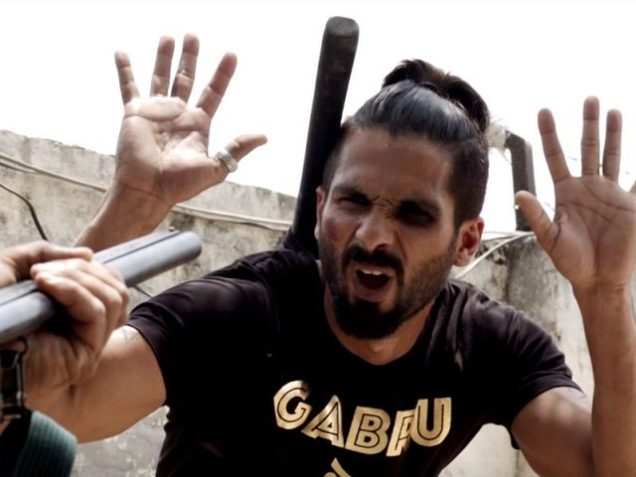
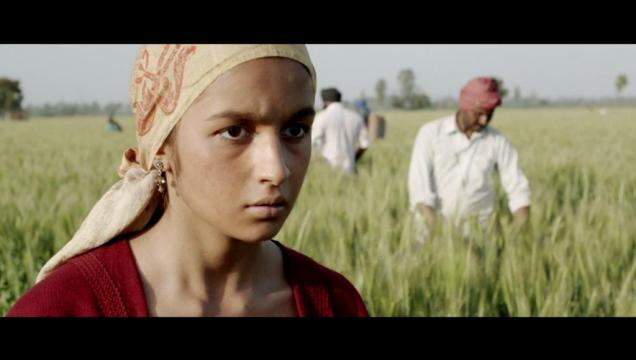
Alia Bhatt is a field worker who comes across a packet of drugs from Pakistan. Shahid Kapoor is a coke addicted rapper rock star who sings about drugs. Kareena Kapoor is a saintly doctor who runs a drug clinic, hands out needles and speaks out against the drug problem. And then there’s Diljit Dosanjh who plays a cop, complicit in looking the other way and taking bribes until he realizes that his younger brother is an addict.
This reminded me immediately of the Hollywood film Traffic that told the story of how the Mexican drug cartels impact four people. I actually have not seen that Oscar winning film, but I did see the BBC series it was based on, Traffik which dealt with drugs from Pakistan in the UK, and it’s a British politician’s daughter who is the addict. The story of Traffic/Traffik and Udta Punjab are not the exact same plot, but the intention is the same — show the impact through four different characters involved in the drug crisis in different levels. And show how the problem is very political. That is overt in Udta Punjab, and that’s why the Indian Censor Board demanded 89 cuts.
Abhishek Chaubey fought back, with the backing of other filmmakers and took it to the High Court. In the end, the only cut and change was re-editing a scene where Shahid’s rock star urinates all over his audience at a concert. Which we saw in the trailer!! I’m so glad this film was released on time and that it is basically exactly what the filmmakers wanted to show us. There was such a rush that the subtitles on the copy I saw still had some copy errors – when characters sang the subtitles were supposed to be italicized, but we saw typed out <i>.
I don’t want to spoiler the movie. The performances were amazing. Kareena Kapoor was well cast as the cool, collected doctor. I wasn’t surprised that she was good. After the bomb of Shaandaar (which I did enjoy parts of), Alia and Shahid are back with a bang. Shahid in Udta Punjab is acting at the levels he reached in Kaminey and Haider. His character is a rock star. He’s larger than life at nearly every moment, but he’s not just a comic caricature – Shahid manages to find some nuance and depth in the quiet moments, like when he’s arrested for lewd behavior and is thrown into a cell filled with criminals.
Alia Bhatt just keeps getting better and better. I thought she was a lightweight when I first saw her in Student of the Year, and she is very good in romantic comedy roles. But when she’s in a drama like Highway, she can really pull out the stops with some amazing scenes. And there are even more show stoppers in Udta Punjab. Horrible things happen to her in this movie, and it is her indomitable spirit that carries us through. I was stunned at what happens to her and how she just perseveres to the end.
But Diljit Dosanjh’s humble policeman was the revelation of the film to me. Diljit is big star in Punjabi films, but I have not seen him before Udta Punjab. I have had Jatt and Juliet recommended to me, and I’m definitely going to seek it out now. He was adorable in his timid romance with Kareena Kapoor’s doctor. He wants to be the hero, and show her he can make a difference. He’s trying to save his drug addict younger brother, as their father has died and he is the head of the house. He has amazing quiet everyman screen presence and then can be explosive when an action scene calls for it.
This is a film that left me stunned, as it has realism like you rarely see in Hindi cinema. It gives you a lot to think about. And it lays bare just how big the drug problem apparently is in Punjab. Udta Punjab already garnered a lot of press and talk just because of the censor fight. I hope now that everyone can see for themselves the content of the film, that it will spur conversations about the issues raised in the film.
















 Naman is the leader of his Bangalore college quiz team, and the leader of nerds in the same way Anthony Michael Hall was the leader of his group of nerds in Sixteen Candles. They delight in throwing trivia at each other and quoting Noel Coward.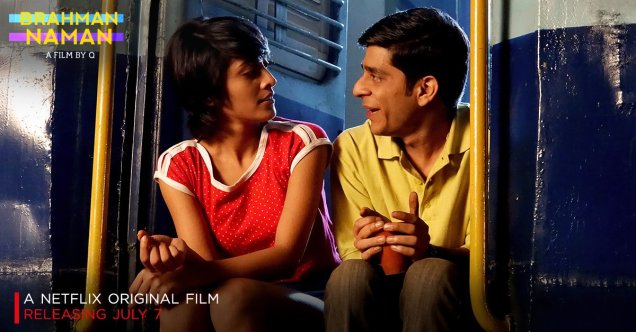











 Pardesi Reviews